
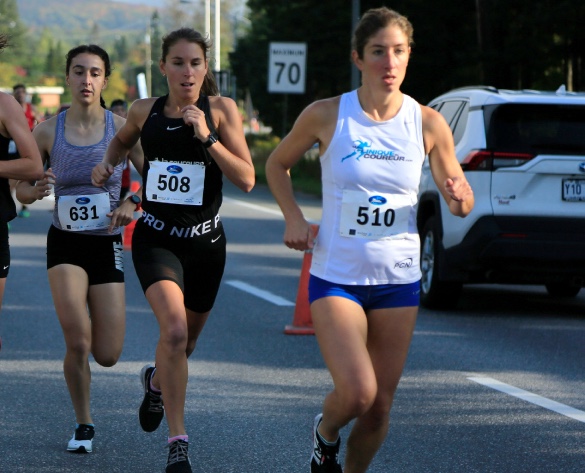
A physio-led running assessment pins down the one movement fault — a dropping hip, a short stride, a stalled cadence — behind your pain or plateau, then hands you a targeted fix instead of more guesswork.
Direct answer: A running assessment is a structured exam where a physiotherapist watches your gait and tests your strength, mobility, and training load to find the root cause of an injury or a performance problem. A session runs 45 to 60 minutes and ends with a plan: retraining cues, strength targets, and a return-to-run timeline built around you.
Why do runners get hurt doing the same thing they’ve always done?
Running rehearses the same movement thousands of times — the same repetition logic behind a bike fit for knee and back pain. Every kilometre is roughly 700 foot strikes on each side. So a small flaw — a hip that drops 3 cm, a knee that caves in on landing — doesn’t stay small. It gets practised, run after run, until the tissue gives. That’s why IT band syndrome, runner’s knee, and plantar fasciitis so often seem to arrive out of nowhere. Nothing changed. The flaw was just finally loaded enough times.
Most people keep getting hurt because they chase the pain instead of the cause. The tight calf is the symptom. The weak glute is frequently the reason. Treat the calf and you buy a few weeks. Miss the glute and you’ll be back.
One pattern we often see in clinic is a lower cadence — the number of times your foot hits the ground per minute — which can come from overstriding. Trying to increase cadence by 10 per cent without increasing speed can be one of the most efficient ways to improve your running economy and build strong tendons in the feet, knees and hips.
What does a running assessment actually involve?
Our sports physiotherapy assessment has three parts.
History and load check. Before you lace up, we talk. Training volume, footwear, recent jumps in mileage or terrain, what you’ve already tried. This part earns its keep: a 10 per cent weekly mileage spike is one of the strongest predictors of overuse injury, no matter how clean your mechanics look.
Movement screen, off the treadmill. Single-leg squat, hip stability, ankle dorsiflexion, hip flexor and hamstring length. These tests show the structure before you run a step. A hip that wobbles on a slow single-leg squat in the clinic is the same hip that drops once fatigue hits at kilometre eight.
Gait analysis on the treadmill. The standard session involves a walking warm-up, followed by a few minutes of running warm-up at your usual pace before we start filming. We film from behind and from the side, then watch cadence, where your foot lands relative to your hips, trunk lean, arm swing — and how all of it shifts as you tire. Slow-motion playback shows you what your hips, knees, and ankles are actually doing. You can’t feel that from the inside. You have to see it.
We are able to start and stop the treadmill as often as needed to tailor the session to you — to look at the effect of different speeds, to compare hills against flat, or to look at barefoot running to see how your gait changes.
Take a recreational runner who comes in with foot pain, wondering whether the old running shoes they’ve been wearing are to blame. We’d watch them run with the shoes on, then barefoot, to see whether the pain and the gait change at all. That comparison is what lets us identify ideal running shoes, alongside the hip or foot exercises that might load or deload a structure, and build a tailored running plan for their goals.
What specific faults does a running assessment look for?
A handful of patterns show up again and again:
- Contralateral pelvic drop (Trendelenburg pattern): the hip on the non-weight-bearing side sinks during stance. It overloads the IT band, the lateral knee, and the lower back on the stance side. The fix is almost always loading the hip abductors and glute med.
- Overstriding: the foot lands well ahead of the hips. Every stride brakes, and the impact pours through the knee. Lifting cadence by 5 to 10 per cent shifts that load back toward the hip and eases patellofemoral stress.
- Anterior pelvic tilt under load: the pelvis tips forward as you run, compressing the lumbar spine and shortening the hip flexors. Often it traces back to a desk, not the road.
- Knee valgus at midstance: the knee collapses inward, loading the medial knee and foot. The origin can be the hip, the ankle, or both.
- Insufficient ankle dorsiflexion: a stiff ankle forces compensations up the chain — early heel rise, more demand on the knee, a changed trunk position.
How is a physio running assessment different from a running-store gait analysis?
A store analysis exists to sell you the right shoe. It captures maybe 10 to 15 seconds of treadmill footage and calls your pronation. One variable, one conclusion.
A physiotherapy assessment looks at strength, mobility, load history, neuromuscular control, and movement — then ties those findings to the symptoms you actually walked in with. If your foot pronates because your hip is weak, a motion-control shoe quiets the foot and leaves the hip exactly as it was. The pronation comes back. So does the injury.
That isn’t an argument against footwear mattering. Sometimes the shoe genuinely is the problem, which is exactly why we compare shod and barefoot running in the same session — it tells us whether the shoe is driving your symptoms or simply carrying a compensation that started further up the chain.
When should you book a running assessment?
You don’t have to be hurt. An assessment earns its place in a few situations:
- Recurring injury. Same knee, same shin, same hip, every block. The injury isn’t the problem — it’s the signal.
- Ramping up. First half-marathon, a comeback after time off, or a move from road to trail. Returning to running after having a baby has its own considerations — see pelvic health and running.
- A plateau. Your pace has flattened despite steady training. Inefficient mechanics cap both speed and endurance.
- Returning after injury. Stress fracture, tendinopathy, surgery. A supervised return-to-run lowers the odds of a repeat, and stubborn muscle tension sometimes responds to IMS or dry needling alongside the loading work (the difference between the two is explained here).
What do you get out of it?
You leave the assessment with:
- A plain explanation of the fault or faults found — shown to you on video, not described in the air.
- A short set of exercises aimed at the exact weakness or restriction we identified.
- Cues to run with on your easy days, such as holding a higher cadence or driving the hip back instead of pulling the knee up.
- A running plan built around your goals, including a build-up or return-to-run progression if your volume needs adjusting.
- A straight answer on whether a follow-up is worth it or whether you can take it from here yourself.
Frequently asked questions
How long does a running assessment take?
Most run 45 to 60 minutes. The session starts with a walking warm-up, followed by a few minutes of running at your usual pace before we start filming. Bring your training shoes, and wear shorts or tights if you can — we need to see the lower limb move clearly.
Do I need to be injured to book a running assessment?
No. They’re as useful for staying healthy through a training build as they are for sorting out pain you already have. Plenty of runners book one when mileage starts climbing toward a race.
Can you assess my running shoes during the session?
Yes. We can start and stop the treadmill as often as needed, which includes running in your current shoes and then barefoot to see whether your pain and your gait change. That comparison helps us identify ideal running shoes alongside the hip or foot exercises that load or deload the structure involved.
Will my extended health benefits cover a physio running assessment?
A running assessment is delivered as a physiotherapy appointment, so it is billed as physiotherapy. Coverage depends on your individual plan — check your own plan’s per-visit cap and annual maximum, because both vary by employer and insurer.
Where in Vancouver does Envision offer running assessments?
Running assessments are available at Envision Physiotherapy in Vancouver. Contact us to book into the location set up for treadmill-based gait analysis.
About the author
Harry Toor is a registered physiotherapist and co-owner of Envision Physiotherapy in Vancouver. He spent three years as the therapist for the Canadian Men’s Ski Team and was part of the medical team for the 2006 and 2010 Winter Olympics. He is an instructor for Sport Physiotherapy Canada (including First-Responder for Sport) and the Canadian Red Cross, an Adjunct Professor in the Gross Anatomy Lab at UBC’s Physiotherapy Masters Program, and an IMS instructor for Foundations Health Education. His treatment combines manual therapy, IMS and exercise.
Pain or a plateau in your running?
A running assessment gives you the cause, not just the sore spot. Contact us to book, or read more about our sports physiotherapy services.
This article is written for educational purposes and does not replace individual medical advice. If you have a specific injury, see a physiotherapist or physician for assessment.