
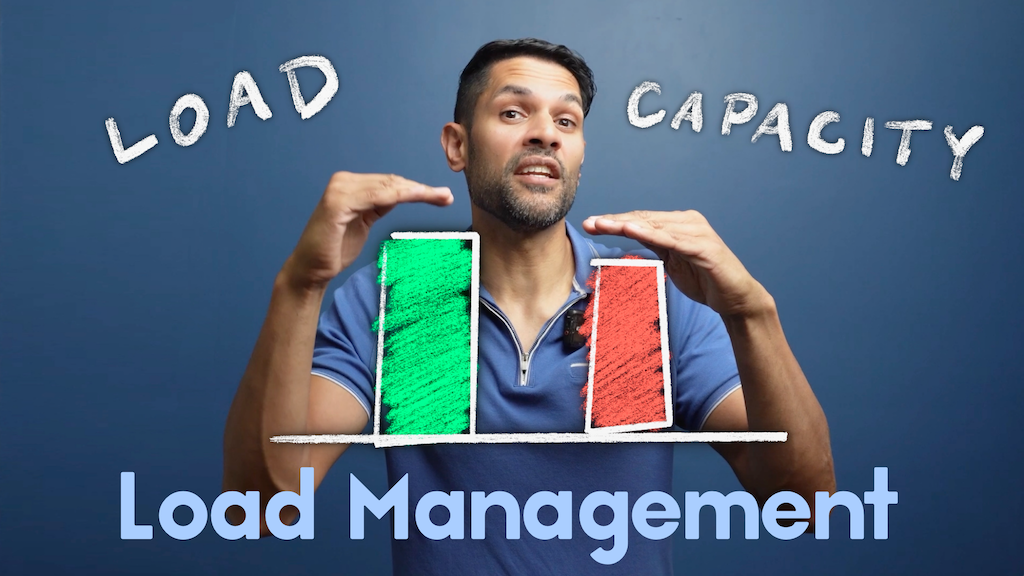
At both our physio clinics in Vancouver, we see all sorts of injuries. One common concept we try to share with our clients is that of “Load Management”. Understanding this will help throughout all aspects of rehabilitation: from acute injury to performance optimization.
With all injuries we have to be careful not to overload the tissues when they are vulnerable ….. but we also have to avoid UNDER loading the tissue. An appropriate level of stress actually helps the healing tissue adapt to that stress.
When a stress is applied to any tissue, the slack is taken up and the tissue will undergo some “strain”. This can result in adaptation: (we get stronger, more mobile, better bone density, stronger ligaments, improved cardiovascular fitness). However, when the stress passes the tolerance threshold for the tissue, the tissue fails: becomes damaged or injured.
Choosing the appropriate level of stress will depend on the type and severity of injury, what kind of interventions have taken place, the current stage of healing and the general health of the individual.
While no stress causes no adaptation, the right dose of stress causes a healthy adaptation… and too much stress can result injury.
The other half of the equation is Capacity. Capacity is our ability to handle the load safely. As our tissues adapt through appropriate loading, our capacity for loading incrementally increases. If we are regular and gradual with our loading, we will continue to adapt and increase our capacity for future loads. Some common things that also affect our capacity are: sleep, nutrition, general health, stress, to name a few.
Ito summarize, if we do things to support our capacity, and we are loading regularly and only gradually increase, loads that were previously considered “too much” are now very manageable. However, if we stop loading regularly and our capacity goes down, loads that were previously manageable may now become excessive.
For more on managing training loads safely, see our note on returning to sport.